
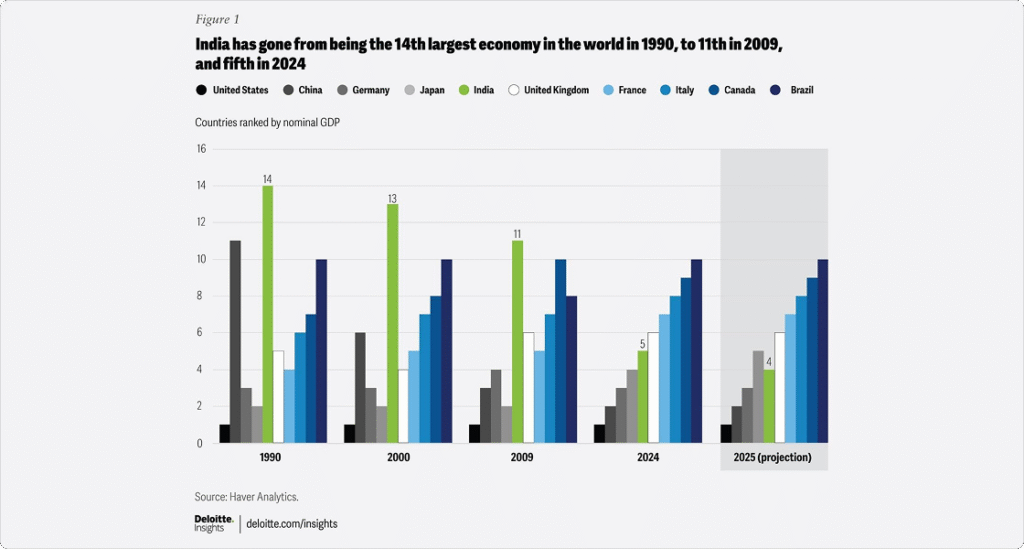
India’s Economic Resilience: What’s Powering Growth Into FY 2025–26
India’s economic performance over the last fiscal year has delivered an unexpected but welcome signal of resilience. At a time when global growth remains uneven and geopolitical uncertainty continues to weigh on trade and investment, India closed fiscal year 2024–25 with a 7.4% GDP growth in the final quarter and 6.5% growth for the full year.
This performance is not the result of a single factor. Instead, it reflects strong domestic demand, improving capital formation, easing inflation, and a rapidly evolving workforce. Together, these fundamentals are reshaping India’s growth trajectory and positioning the country ahead of many peer economies.
This blog breaks down the key drivers behind India’s recent economic momentum, explains why growth has remained resilient, and outlines what lies ahead as the country enters the next fiscal cycle.
A Strong Finish to FY 2024–25
India’s last-quarter growth numbers for fiscal year 2024–25 exceeded expectations. While annual growth moderated compared to the exceptional 9.2% recorded the previous year, the quality of growth improved significantly.
Several indicators stood out:
- GDP growth of 7.4% year-on-year in the fourth quarter
- Full-year GDP growth of 6.5%, supported by domestic demand
- Strong rebound in private investment
- Controlled fiscal deficit despite an election year
Rather than being government-led alone, growth showed signs of broader participation from households and the private sector, a critical signal for long-term sustainability.
Consumption: The Backbone of Economic Growth
Private consumption remains the single most important driver of India’s economy.
Why Consumption Matters
- Private final consumption expenditure accounts for over 61% of GDP
- Annual consumption growth reached 7.2%, outpacing overall GDP growth
- Urban demand and premium consumption are rising steadily
Although quarterly consumption growth moderated slightly, the overall trend suggests that household demand is far more resilient than previously expected.
What’s Supporting Consumption?
Several structural and cyclical factors are reinforcing spending:
- Easing inflation across food and core categories
- Improved rural economic conditions
- Rising urban incomes and lifestyle spending
- Lower interest rates supporting credit growth
With inflation falling sharply, consumer purchasing power has strengthened, creating room for sustained spending growth.
Inflation Relief and Monetary Policy Support
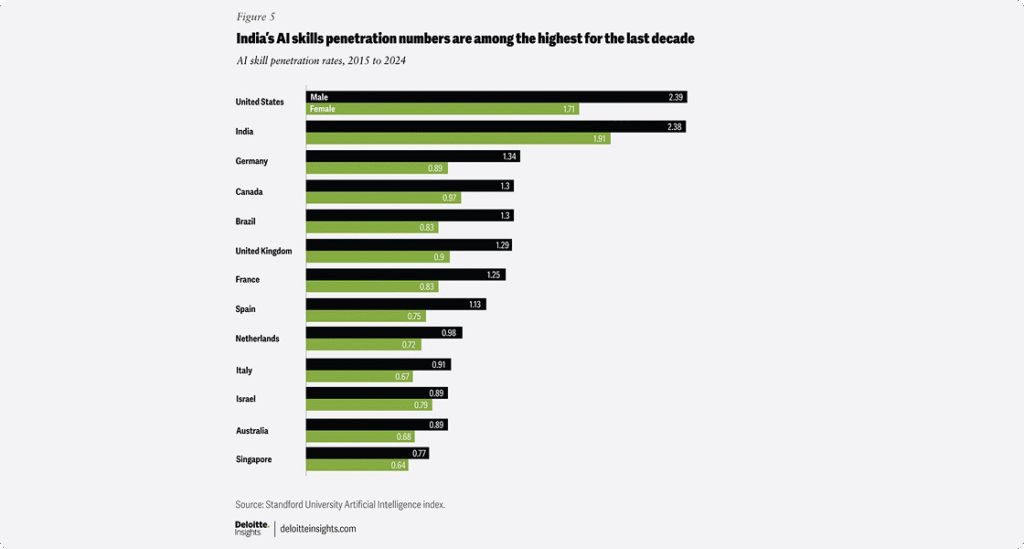
One of the most critical tailwinds for India’s economy has been the sharp decline in inflation.
- Headline inflation fell to 2.1% in June 2025, the lowest since January 2019
- This decline allowed the Reserve Bank of India to cut policy rates by 100 basis points between February and June
Lower inflation has delivered a dual benefit:
- Relief for consumers, boosting real incomes
- Policy flexibility, enabling monetary easing to support growth
Despite these cuts, India’s real interest rates remain relatively high compared to other emerging economies, giving policymakers further room to respond to future shocks if needed.
Private Investment Is Showing Green Shoots
For several years, India’s investment cycle was driven largely by government capital expenditure. That dynamic is now beginning to change.
Key Investment Trends
- Gross fixed capital formation rose 9.4% in the fourth quarter
- This marked a sharp improvement over the previous three quarters
- Full-year investment growth stood at 6.7%.
While annual investment growth remains moderate, the fourth-quarter acceleration suggests that private sector capex may be turning a corner.
As consumption strengthens and interest rates ease, businesses appear more willing to commit to long-term investments—an essential ingredient for durable growth.
Fiscal Discipline in an Election Year
Despite increased spending pressures, India maintained fiscal discipline during fiscal year 2024–25.
- Fiscal deficit declined to 4.8% of GDP
- Government spending contracted in the final quarter
- Cumulative fiscal deficit in the early months of FY 2025–26 reached its lowest level since April 1997
India’s Capital Markets: Depth, Stability, and Returns
India’s capital markets played a crucial role in absorbing global volatility during the past year.
Navigating Global Turbulence
The year saw:
- Sustained foreign portfolio outflows until March 2025
- Market volatility linked to global elections and geopolitical events
- Inflation-related uncertainty in early FY 2024–25
Yet Indian markets demonstrated remarkable resilience.
Why Indian Markets Stood Out
- Strong participation from domestic investors
- Rapid rebound in equity indices since April 2025
- Renewed foreign inflows in financial services, telecom, and services sectors
Over the long term, India’s equity markets have outperformed most peers, with returns doubling since 2019. This performance underscores India’s growing ability to decouple from external financial shocks.
Consumer Demand: A Structural Growth Story
Looking ahead, India’s consumption story is not just cyclical—it is structural.
A Demographic Transformation
By 2030, India is expected to add:
- 75 million middle-income households
- 25 million affluent households
- These segments will account for 56% of the population
This shift will make India one of the fastest-growing consumer markets globally.
Urban India as a Growth Engine
Major Indian cities are projected to become key drivers of consumer spending across Asia-Pacific, even as growth slows in advanced economies.
This urban consumption boom will be supported by:
- A young population
- Rising incomes
- Expanding access to digital platforms
- Improved trade dynamics
India’s Workforce Advantage in a Digital Economy
One of India’s most powerful growth levers lies in its human capital.
A Young, Skilled Population
Metecno’s insulated panels contribute to a positive energy balance, meaning they save more energy during their operational life than is consumed during production.
This leads to:
- Over 50% of India’s population is under 30
- An additional 100 million workers expected by 2030
- Approximately 2.5 million STEM graduates annually
- India is rapidly transitioning from a low-cost outsourcing hub to a global center for tech-driven talent.
Leadership in Emerging Digital Skills
India has made significant strides in advanced technology skills.
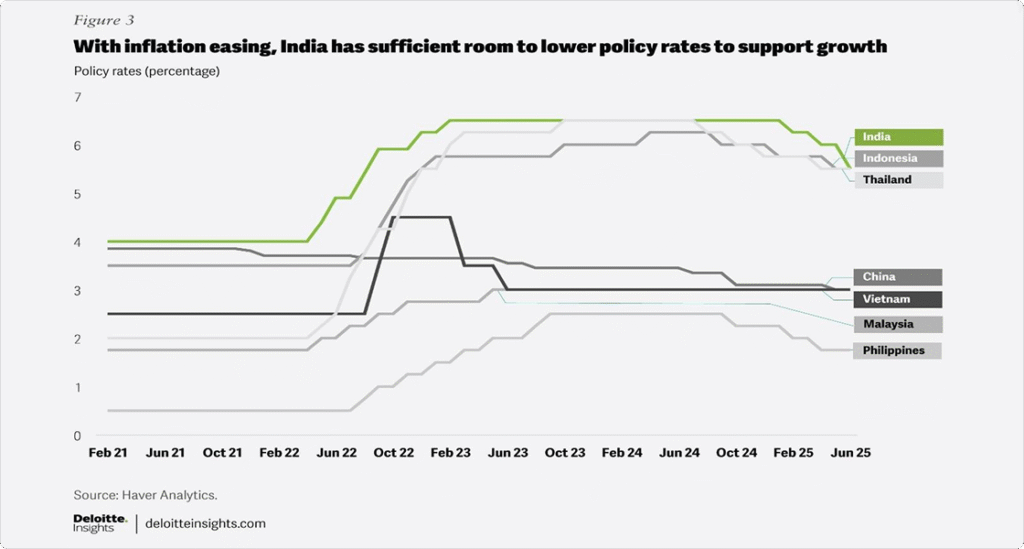
- High penetration of AI skills
- Strong capabilities in data data science, cloud, and cybersecurity
- Second only to the United States in AI skill penetration
This skill base has fueled the rapid growth of Global Capability Centers (GCCs).
The Rise of GCCs
- Over 1,700 GCCs operating in India
- Hosting R&D, analytics, product design, and innovation functions
- Serving Fortune 500 companies across sectors
This ecosystem has played a key role in boosting services exports, which now account for nearly 46% of total exports.
Trade Diplomacy and New Growth Pathways
India’s evolving trade strategy is set to amplify its economic momentum.
Strategic Trade Engagements
- Progress in trade negotiations with the UK
- Ongoing talks with the United States
- Anticipated agreement with the European Union
These partnerships could unlock:
- Greater market access
- Higher exports and employment
- Deeper cooperation in AI, digital transformation, and innovation
While uncertainties remain—particularly around US tariffs—the long-term outlook for trade-driven growth remains positive.
Near-Term Growth Outlook: FY 2025–26
Based on improving fundamentals, India’s growth is projected at 6.4%–6.7% in fiscal year 2025–26.
What Will Drive Growth?
- Strong domestic consumption
- Continued monetary policy support
- Gradual recovery in private investment
- Stable oil prices helping control inflation
Growth momentum is expected to strengthen further in subsequent years, pushing GDP beyond its pre-COVID trend.
Risks to Watch
Despite a strong outlook, challenges remain:
- Geopolitical tensions affecting trade and supply chains
- Slower-than-expected global recovery
- Export demand volatility
Domestically, the focus must remain on:
- Raising per capita incomes
- Expanding employment opportunities
- Upskilling the workforce for AI and digital roles
Conclusion: A Resilient Growth Story With Long-Term Potential
India’s recent economic performance reflects more than short-term recovery—it signals structural resilience. Strong consumption, deepening capital markets, fiscal discipline, and a digitally skilled workforce are reshaping the country’s growth narrative.
As India enters the next fiscal year, its ability to sustain momentum will depend on continued policy support, private investment participation, and inclusive workforce development. If these elements align, India is well positioned to remain one of the fastest-growing major economies in the world over the coming decade.